
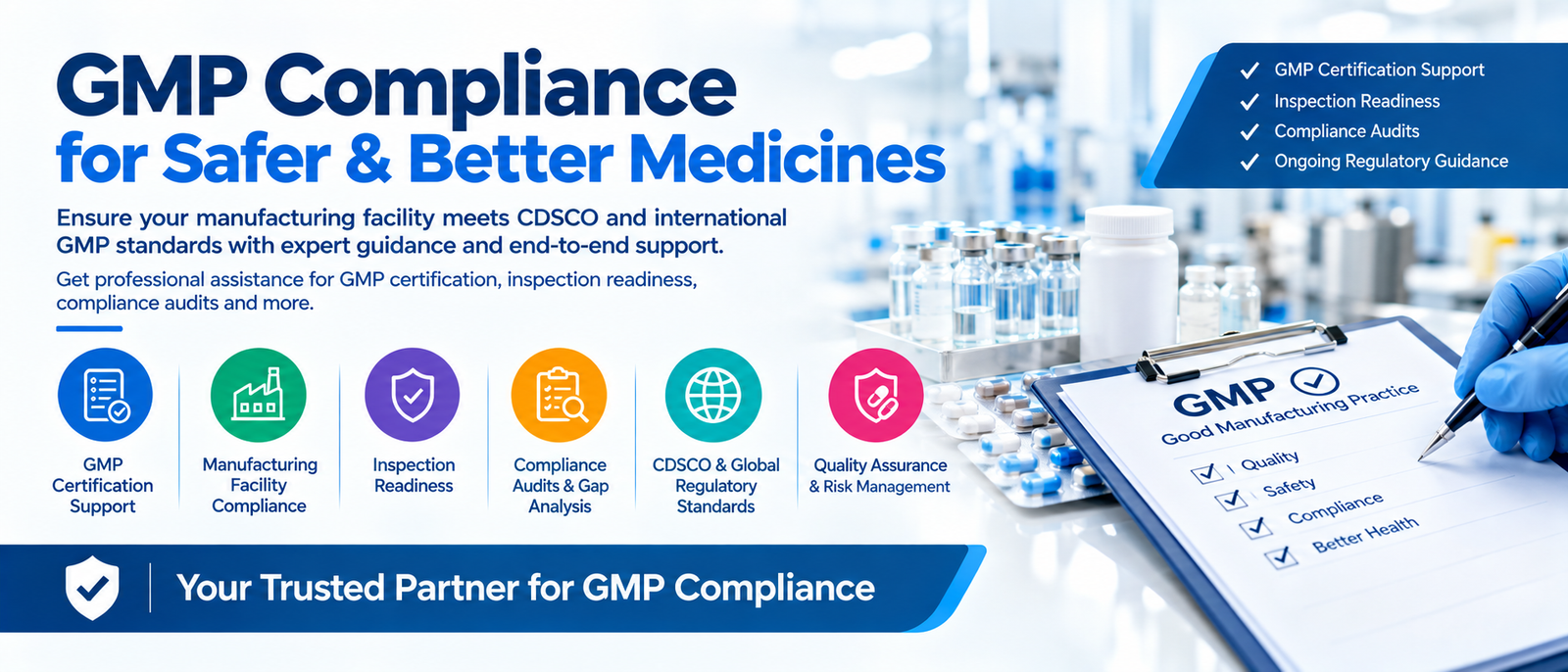
GMP compliance support — facility and process assessment, SOPs, quality-control documentation, gap analysis and inspection readiness.
GMP Compliance means following Good Manufacturing Practices to ensure that products are consistently manufactured and controlled according to appropriate quality standards. For cosmetic manufacturers in India, the Cosmetics Rules, 2020 prescribe Good Manufacturing Practices and requirements for premises, plants and equipment in the Seventh Schedule.
GMP compliance covers much more than maintaining a clean manufacturing facility. It includes the manufacturing environment, personnel, equipment, water supply, sanitation, documentation, quality control, testing, storage and proper handling of raw materials and finished products.
ELT Corporate provides GMP Compliance support to help manufacturers understand applicable requirements, identify compliance gaps and improve their manufacturing and documentation systems.
- AssessFacility, process and documentation review
- Fix GapsSOPs, records and quality controls
- Stay ReadyInspection-ready every day
Quick Facts
| Particular | Details |
|---|---|
| Framework (cosmetics) | Cosmetics Rules, 2020 — Seventh Schedule |
| Declaration form | Form COS-7 self-certificate |
| Covers | Premises, personnel, equipment, water, QC, records |
| Water quality | Potable-quality water for manufacturing |
| Equipment | Maintenance, servicing and calibration with records |
| Quality control | Sampling, inspection and testing at each stage |
| Nature | Ongoing practice, not a one-time activity |
What is GMP Compliance?
GMP Compliance is the process of ensuring that a manufacturing facility follows established Good Manufacturing Practices throughout its operations. The objective is to maintain consistent product quality and reduce the possibility of contamination, manufacturing errors and quality failures.
For cosmetics manufactured in India, the Seventh Schedule of the Cosmetics Rules, 2020 addresses factory location, buildings, personnel, water supply, waste disposal, staff hygiene, equipment maintenance and quality control.
Why is GMP Compliance Important?
- Consistent QualitySame product quality, batch after batch.
- Controlled ManufacturingBetter manufacturing controls and hygienic conditions.
- Lower RiskReduced contamination and mix-up risk.
- DocumentationOrganised records and traceability.
- Inspection SupportFacility and papers ready for regulatory review.
- ConfidenceAssurance for customers and business partners.
For cosmetic manufacturing, the requirements specifically emphasise overall control and monitoring so that consumers receive products of the specified quality.
Who Needs GMP Compliance Support?
- Cosmetics and personal care product manufacturers
- Skincare and hair-care product manufacturers
- Beauty products and colour cosmetics manufacturers
- Toiletries manufacturers
- Other regulated manufactured products
The exact requirements depend on the nature of the product, the manufacturing activity and applicable regulations.
Key Areas Covered Under GMP Compliance
- Manufacturing premisesLocated in a sanitary place, maintained hygienically, adequately ventilated and kept clean.
- Buildings and production areasWashable surfaces, ventilation, lighting, protection against insects and rodents, and contamination control.
- Personnel hygieneSuitable qualifications and experience, hygiene practices, protective clothing and washing facilities.
- Water qualityPotable-quality water for manufacturing cosmetics.
- Equipment maintenanceProperly maintained and serviced, calibrated where applicable, with records.
- Raw material controlInspection, testing and documentation before materials are used.
- Quality controlSampling, inspection and testing of raw, packaging, in-process, intermediate and finished products.
- Storage and handlingSuitable storage conditions and organised handling to avoid contamination or mix-ups.
We can walk through your premises, equipment records and SOPs and tell you exactly what needs fixing.
GMP Documentation and Records
Good manufacturing practices also require proper documentation. Depending on the operation, this may include:
- Standard Operating Procedures (SOPs)
- Manufacturing procedures
- Cleaning procedures
- Storage procedures
- Equipment maintenance and calibration records
- Raw material records
- Batch manufacturing records
- Quality-control and testing records
- Training records
- Complaint records
- Corrective and preventive action records
- Product release records
Proper records help demonstrate that manufacturing activities are being performed according to established procedures.
GMP Compliance Assessment Process
- Initial discussionUnderstand your manufacturing activity, products, facility and current compliance system.
- Regulatory requirement reviewIdentify the applicable GMP requirements for your activity.
- Facility and process assessmentReview manufacturing areas, equipment, hygiene practices, storage and QC systems.
- Documentation reviewExamine existing SOPs, records, manufacturing documents and QC documentation.
- Gap identificationIdentify gaps between the existing system and applicable requirements.
- Compliance supportPractical guidance for addressing the gaps and improving systems.
- Final compliance reviewReview updated documentation and practices for remaining issues.
Documents Required for GMP Compliance
- Company details and manufacturing licence details
- Facility layout and equipment list
- Manufacturing process information
- Product details and specifications
- Raw material details
- Quality-control procedures and testing reports
- SOPs and batch records
- Cleaning and sanitation records
- Equipment maintenance and calibration records
- Personnel training records
- Storage procedures
- Complaint-handling procedures
Common GMP Compliance Mistakes
- Inadequate facility hygiene
- Poor documentation and missing SOPs
- Improper equipment maintenance and missing calibration records
- Inadequate employee training
- Improper storage practices
- Weak quality-control procedures
- Incomplete batch records and poor cleaning documentation
- Lack of proper raw-material controls
- Inconsistent manufacturing procedures
GMP Compliance for Cosmetic Manufacturers
For cosmetic manufacturers, GMP requirements are specifically addressed under the Seventh Schedule of the Cosmetics Rules, 2020 — covering premises, buildings, personnel, water, waste disposal, staff hygiene, maintenance and testing or release of raw materials and finished cosmetic products.
Manufacturers should assess their facility and quality systems against the applicable requirements on an ongoing basis, rather than treating GMP as a one-time certification activity.
How ELT Corporate Helps
- Requirement AssessmentGMP requirement assessment for your manufacturing activity.
- Facility ReviewManufacturing facility and process review.
- SOPsSOP preparation and documentation support.
- Quality ControlQC documentation and testing arrangement guidance.
- RecordsEquipment, maintenance and record-keeping support.
- Inspection ReadinessGap assessment and inspection-readiness support.
Benefits of GMP Compliance Support
- Better manufacturing control — consistent and controlled practices
- Improved documentation — systematic manufacturing and quality records
- Reduced compliance gaps — problems found before an inspection
- Better quality management — proper control of materials, processes and finished products
- Inspection readiness — facility and documentation organised for review
- Long-term compliance — GMP maintained as an ongoing practice
Frequently Asked Questions
It means following Good Manufacturing Practices to maintain controlled, hygienic and consistent manufacturing operations.
Yes. The Cosmetics Rules, 2020 contain specific Good Manufacturing Practices and requirements for premises, plants and equipment under the Seventh Schedule.
Premises, personnel, hygiene, equipment, water, raw materials, manufacturing processes, quality control, testing, storage and documentation.
It helps manufacturers maintain consistent product quality and controlled manufacturing conditions.
No. GMP involves the overall system — people, procedures, equipment, quality control, documentation and facility conditions.
Yes. SOPs help establish consistent procedures for important manufacturing and quality activities.
Yes. The Seventh Schedule includes maintenance requirements and calls for servicing and calibration of equipment where required, with records maintained.
Yes. Quality control is an essential component, including appropriate sampling, inspection and testing of materials and finished products.
Yes. We assist with reviewing and organising GMP-related documentation, SOPs, records and compliance requirements.
No. Manufacturing practices, documentation, equipment and quality-control procedures should be maintained and periodically reviewed.
Need GMP Compliance Support?
For cosmetic manufacturers in India, the Cosmetics Rules, 2020 provide specific GMP requirements covering premises, personnel, equipment, hygiene, water, maintenance and quality control. ELT Corporate helps you review current practices, identify gaps, improve documentation and establish systems that support ongoing compliance.
Share your facility and documentation details, and our team will map the gaps and the fixes in a clear list.
Book Your ConsultationFrom documentation to final approval, our regulatory team handles the entire process for you.