
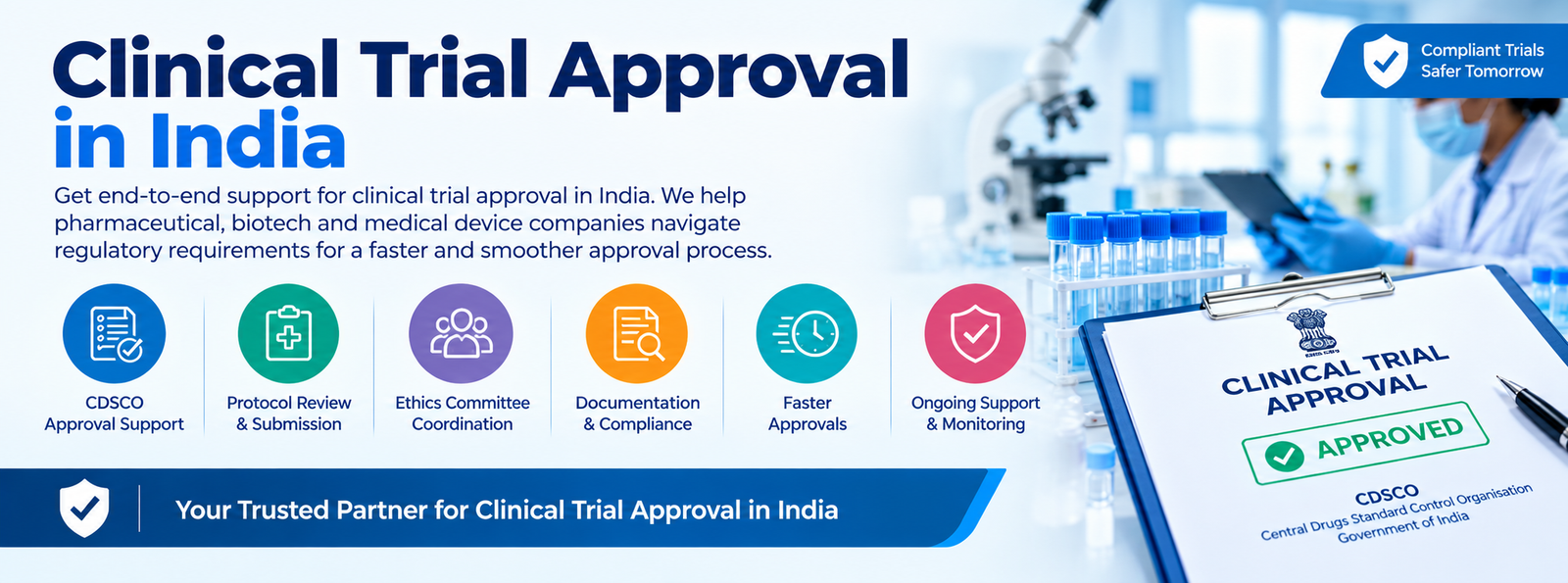
Clinical Trial Approval support — protocol and consent documents, application preparation, regulatory submission, queries and during-trial compliance.
Clinical trials are an important part of developing and evaluating new medicines, drugs, vaccines, and other healthcare products. Before a clinical trial can begin in India, sponsors and organizations need to meet applicable regulatory and ethical requirements.
ELT Corporate provides professional support for Clinical Trial Approval in India, helping sponsors, pharmaceutical companies, research organizations, and other stakeholders understand the applicable requirements and prepare their applications properly. Our assistance covers documentation, application preparation, regulatory submissions, communication with authorities, and compliance-related support throughout the approval process.
- PlanProtocol, sites and investigators
- EthicsCommittee review and consent documents
- FileSubmission, queries and compliance
Quick Facts
| Particular | Details |
|---|---|
| Permission | Required before a clinical trial begins |
| Applies to | Trials involving regulated products and human participants |
| Two sides | Regulatory permission and ethical approval |
| Key papers | Protocol, investigator’s brochure, consent documents |
| Ethics Committee | Reviews safety, consent and participant protection |
| After approval | Records, protocol adherence and safety reporting continue |
| Timeline | Varies with the study, documents and review |
What is Clinical Trial Approval?
Clinical Trial Approval is the regulatory permission required to conduct a clinical trial in accordance with applicable Indian laws and regulatory requirements.
The approval process helps ensure that the proposed clinical research is properly planned and that the safety, rights, and well-being of participants are adequately considered. Depending on the nature of the trial and the product involved, different regulatory and ethical requirements may apply.
Why is Clinical Trial Approval Important?
Clinical research involves human participants, so it is important that trials follow appropriate scientific, ethical, and regulatory standards. Clinical Trial Approval helps establish that:
- The proposed trial has been properly planned
- Participant safety has been considered
- Required documents are available
- Ethical requirements are addressed
- The study follows applicable regulatory requirements
- Necessary regulatory submissions are completed
- The trial can be conducted within the approved framework
Proper regulatory preparation can also help reduce unnecessary delays during the application and review process.
Who May Need Clinical Trial Approval?
Clinical Trial Approval may be relevant to organizations involved in clinical research, including:
- Pharmaceutical companies
- Biotechnology companies
- Drug manufacturers
- Research organizations
- Clinical research organizations (CROs)
- Academic research institutions
- Healthcare organizations
- Sponsors of clinical studies
- Organizations developing new medicines or healthcare products
The exact requirements can depend on the product, study type, applicant, and proposed clinical trial.
Clinical Trial Approval Process in India
The process can vary depending on the nature of the clinical study and the product being investigated. A typical process may include the following steps:
- Understand the regulatory requirementsThe first step is to identify the applicable regulatory requirements for the proposed clinical trial.
- Prepare the required documentsRelevant technical, administrative, scientific and supporting documents are prepared according to the applicable requirements.
- Application preparationThe application is prepared with the necessary information about the product, study protocol, investigators, trial sites, participants and other details.
- Regulatory submissionThe application and supporting documents are submitted through the applicable regulatory process.
- Regulatory reviewThe submitted information may be reviewed by the concerned authorities and committees. Additional information may be requested during the review.
- Respond to queriesIf regulatory queries are raised, the applicant needs to provide appropriate responses and supporting information.
- Approval and complianceOnce the requirements are satisfied and permission is granted, the sponsor can proceed according to the approved conditions and compliance requirements.
Documents Required for Clinical Trial Approval
The exact documentation depends on the clinical trial and the product involved. Common documents may include:
- Clinical trial application
- Clinical trial protocol
- Investigator-related information
- Investigator’s brochure
- Informed consent documents
- Patient information materials
- Product-related information
- Pre-clinical and clinical data, where applicable
- Manufacturing and quality information
- Safety information
- Ethics committee-related documents
- Trial site information
- Other documents required by the applicable regulatory framework
Proper documentation is important because incomplete or inconsistent information can result in regulatory queries or delays.
Role of Ethics Committee in Clinical Trials
Ethical review is an important part of clinical research involving human participants. An Ethics Committee reviews the study from an ethical perspective and considers issues such as participant safety, informed consent, confidentiality, and the overall protection of trial participants.
Sponsors and researchers should ensure that the applicable ethical requirements are properly addressed before conducting the study.
Clinical Trial Regulatory Compliance
Approval is only one part of clinical trial compliance. Sponsors and researchers may also need to follow applicable requirements during the trial. This may include:
- Maintaining required records
- Following the approved study protocol
- Monitoring participant safety
- Reporting applicable safety information
- Maintaining informed consent procedures
- Maintaining trial documentation
- Following applicable ethical requirements
- Responding to regulatory requirements
Strong compliance practices can help support the proper and transparent conduct of clinical research.
How ELT Corporate Helps With Clinical Trial Approval
- Requirement ReviewWhich regulatory and ethical requirements apply to your study.
- Protocol PapersProtocol, brochure and consent documents organised.
- Application SupportApplication prepared with product, site and investigator details.
- Submission HelpFiling and coordination through the applicable process.
- Query SupportStructured responses when the authority or committee asks.
- Compliance GuidanceRecords, protocol adherence and safety reporting during the trial.
Our objective is to make the regulatory process easier to understand and help applicants maintain proper documentation and compliance throughout the approval process.
Why Choose ELT Corporate?
Choosing the right regulatory support can make the clinical trial approval process more organized and manageable. ELT Corporate focuses on:
- Practical regulatory guidance — plain answers, not jargon
- Clear communication — you always know the next step
- Proper documentation — papers organised before they are asked for
- Application support — prepared and checked before filing
- Compliance-focused assistance — during the trial, not just before it
- Support during regulatory queries — responses prepared with you
Frequently Asked Questions
Clinical Trial Approval is the regulatory permission required to conduct a clinical trial according to applicable regulatory and ethical requirements.
Clinical trials involving regulated products and human participants may require applicable regulatory permissions and ethical approvals before they can begin.
Depending on the applicable framework, sponsors, pharmaceutical companies, research organizations and other eligible entities involved in clinical research may apply.
Documents can include the clinical trial protocol, product information, investigator details, informed consent documents, safety information and other applicable documents.
The timeline can vary depending on the type of trial, completeness of the application, regulatory review and whether additional information is required.
Yes. ELT Corporate can assist with application preparation, documentation, regulatory submissions and compliance-related requirements.
Yes. Ethical review is an important part of clinical research involving human participants and helps address participant safety and ethical considerations.
The applicant may need to provide additional information, clarification or supporting documents. Properly prepared responses help move the review forward.
No. Sponsors and researchers have continuing responsibilities during the trial, including records, protocol adherence and applicable safety reporting.
Professional assistance can help applicants understand requirements, organize documentation, prepare submissions and handle regulatory queries more efficiently.
Planning a Clinical Trial in India?
Most applications slow down on the protocol papers, consent documents or ethics-committee side. ELT Corporate reviews all three before filing, and stays with you for queries and during-trial compliance.
Share your product, study design and site details, and our team will map the applicable requirements and documents in a clear list.
Book Your ConsultationFrom documentation to final approval, our regulatory team handles the entire process for you.