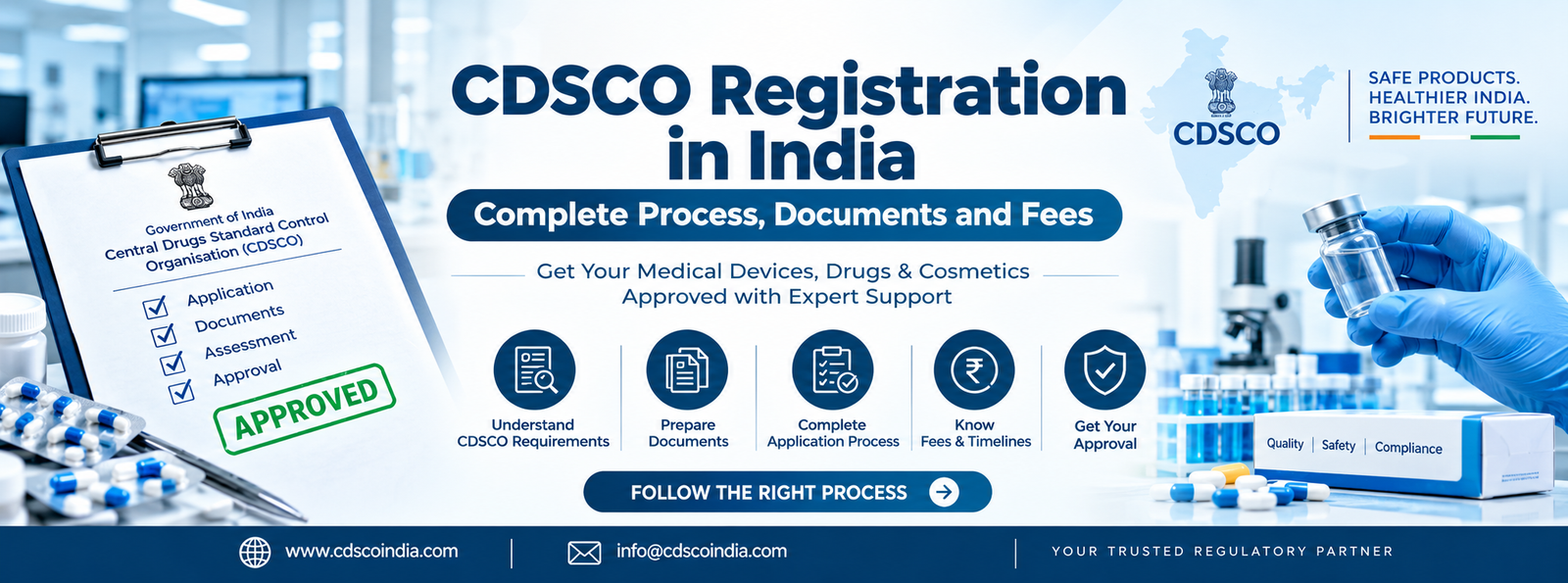
Businesses planning to manufacture, import, or sell medical devices in India must understand the applicable regulatory requirements before entering the market. CDSCO Registration in India helps businesses identify the approvals, licences, and compliance steps that may apply to their medical devices.
The Central Drugs Standard Control Organisation is India’s national regulatory authority for drugs and medical devices. Medical devices are regulated under the Medical Devices Rules, 2017, along with applicable amendments and notifications. The required approval depends on the type of device, its risk classification, and the intended business activity.
ELT Corporate assists manufacturers, importers, and other businesses with understanding the applicable regulatory pathway, preparing documentation, and navigating the application process.
What Is CDSCO Registration in India?
CDSCO Registration in India refers broadly to the regulatory process for obtaining the applicable registration, licence or approval for a medical device or related business activity. The exact requirement varies according to the product category and whether the applicant intends to manufacture, import or distribute the device.
For example, an importer seeking permission to import a regulated medical device generally applies in Form MD-14 to obtain an import licence in Form MD-15. Manufacturing licences follow different application procedures depending on the device’s risk class.
The purpose of these regulatory requirements is to support product safety, quality, and compliance with the applicable Indian rules.
Why Is CDSCO Registration in India Important?
Understanding CDSCO Registration in India is important for businesses that want to introduce regulated medical devices into the Indian market.
Key benefits of following the applicable regulatory process include:
- Regulatory compliance: Helps businesses understand and meet the requirements applicable to their products.
- Market access: Supports lawful market entry once the necessary approvals are obtained.
- Product safety: Encourages proper documentation, quality controls, and product evaluation where required.
- Business credibility: Demonstrates that the business has addressed relevant regulatory obligations.
- Reduced application errors: Proper preparation can help avoid incomplete submissions and preventable delays.
Businesses should confirm the applicable requirements before manufacturing, importing, or selling their products.
Types of CDSCO Registration in India
The applicable approval depends on the product, its risk category, and the activity the business intends to undertake.
1. Medical Device Import Licence
Businesses importing regulated medical devices generally need to follow the applicable import licensing process. For a standard medical device import licence, the application is submitted in Form MD-14, and the licence is issued in Form MD-15 when approved.
2. Medical Device Manufacturing Licence
Manufacturers must identify the appropriate licensing authority and application form for their device. Under the Medical Devices Rules, 2017, manufacturing applications for Class C and Class D devices use Forms MD-7 or MD-8, depending on whether the application is for a manufacturing licence or a loan licence. The resulting licences are Forms MD-9 and MD-10, respectively. Class A and Class B manufacturing requirements follow the applicable rules and licensing arrangements.
3. Sales and Distribution Compliance
Businesses involved in the sale or distribution of medical devices must check the applicable licensing and premises-registration requirements. The correct route depends on the business activity, the product, and the current regulatory provisions.
4. Special Approvals and Product-Specific Permissions
Some devices may require additional permissions, testing, clinical evidence or other product-specific regulatory steps. New devices and in-vitro diagnostic devices may have requirements that differ from those for already approved products.
Medical Device Risk Classification in India
Before beginning CDSCO Registration in India, businesses should determine the correct risk classification of their medical devices. Under the Medical Devices Rules, 2017, medical devices are classified into four categories based on risk.
| Device class | Risk category |
| Class A | Low risk |
| Class B | Low-moderate risk |
| Class C | Moderate-high risk |
| Class D | High risk |
The classification affects the regulatory pathway, documentation, and applicable licensing authority. Businesses should verify their specific product classification against current CDSCO guidance rather than relying on the product name alone.
CDSCO Registration in India: Step-by-Step Process
The process for CDSCO Registration in India depends on whether the application concerns import, manufacturing, or another regulated activity. The following steps provide a general overview.
Step 1: Identify the Product and Applicable Rules
Collect the product’s generic name, intended use, specifications, manufacturer details, and other technical information. Determine whether the product is regulated as a medical device or an in-vitro diagnostic device.
Step 2: Confirm the Risk Classification
Identify whether the device falls under Class A, B, C, or D. Check the relevant CDSCO classification information and current regulatory requirements.
Step 3: Determine the Correct Licence
Select the applicable regulatory route based on the activity. For example, a standard import application generally uses Form MD-14, while manufacturing applications depend on the device class and licence type.
Step 4: Prepare the Required Documents
Collect the applicant’s business documents, manufacturer information, technical product files, quality certificates, and other records applicable to the selected route. Foreign-manufacturer applications may require an authorised-agent arrangement and authenticated documents.
Step 5: Submit the Online Application
Create or access the relevant official online account, complete the application, and upload the required documents. The CDSCO online medical-device system provides application submission and tracking facilities.
Step 6: Pay the Applicable Government Fee
Pay the fee prescribed for the specific application and product category. Check the current official fee schedule before making payment.
Step 7: Respond to Regulatory Queries
The reviewing authority may request clarification, additional documents, or corrections. Respond with accurate and consistent information within the applicable timelines.
Step 8: Obtain the Applicable Approval
If the application satisfies the requirements, the competent authority may issue the relevant licence or approval. Businesses should check the conditions of the approval and maintain ongoing compliance.
Documents Required for CDSCO Registration in India
The documents required for CDSCO Registration in India vary by application type. An import application may require different records from a manufacturing application.
Commonly relevant documents include:
- Certificate of incorporation, business registration or other proof of legal constitution.
- Applicant’s address and authorised signatory details.
- Manufacturer details and manufacturing-site information.
- Product description, specifications and intended-use information.
- Device Master File (DMF), where applicable.
- Plant Master File (PMF), where applicable.
- Quality management system certificates, as applicable.
- Product labels, instructions for use and packaging information.
- Free Sale Certificate or marketing authorisation, where applicable.
- Power of Attorney or authorisation documents for the Indian authorised agent, where required.
- Declaration of conformity and supporting technical documentation, where applicable.
- Fee-payment proof and completed application forms.
The official CDSCO checklist for the relevant application should be treated as the primary reference. For example, the published import-licence checklist includes application-specific requirements such as the application form, fee challan, authorised-agent documents and technical information.
CDSCO Registration Fees in India
The government fee for CDSCO Registration in India is not a single fixed amount for every business. It depends on the type of application, product category, number of devices, and other applicable factors under the relevant rules.
Before applying, businesses should verify:
- The fee applicable to the selected application form.
- Whether charges apply separately to individual devices or additional products.
- Whether any testing, evaluation, or audit costs apply.
- Whether professional consultancy fees are separate from government fees.
- Whether the latest fee schedule or a subsequent notification changes the amount.
Do not rely on an old fee table without checking its current validity. Refer to the official CDSCO medical-device portal and the applicable rules and fee schedule before payment.
How Long Does CDSCO Registration Take?
The processing time depends on the application category, completeness of the documentation, product risk classification, and whether the authority requests further information.
An application with complete, consistent documentation may be easier to review than one with missing technical records or inconsistent manufacturer details. However, there is no single processing timeline that applies to every application.
Businesses should plan ahead, review the applicable requirements, and allow time for regulatory queries, additional submissions, and any required testing or evaluation.
Common Mistakes to Avoid
Applicants can reduce preventable problems by paying attention to the following points:
- Selecting the wrong application form or licensing pathway.
- Misclassifying the medical device.
- Providing inconsistent manufacturer or manufacturing-site details.
- Submitting incomplete technical documentation.
- Using labels that do not match the submitted product information.
- Overlooking applicable authorisation or authentication requirements.
- Paying an incorrect fee.
- Ignoring regulatory queries or approval conditions.
A careful document review before submission can help reduce avoidable corrections and delays.
Benefits of Professional CDSCO Registration Support
Professional assistance can be useful for manufacturers, importers, startups and foreign companies that are unfamiliar with Indian medical-device regulations.
A regulatory consultant can help identify the likely application route, organise the required documents, review the consistency of product information, and assist with responses to regulatory queries. The scope of support should be agreed in advance, and the final approval remains subject to the competent authority’s decision.
How ELT Corporate Helps with CDSCO Registration in India
ELT Corporate provides regulatory compliance support to medical device manufacturers, importers, startups, and businesses seeking to understand their obligations in India.
Our support may include:
- Regulatory guidance: Helping identify the applicable licence or approval pathway.
- Document preparation: Assisting with the organisation and review of required documents.
- Risk classification support: Helping businesses check the appropriate device classification.
- Application assistance: Supporting the preparation and submission of the relevant application.
- Query management: Assisting with responses to regulatory questions and requests for additional information.
- Compliance guidance: Helping businesses understand applicable labelling, documentation, and post-approval obligations.
If your business needs assistance with CDSCO Registration in India, contact ELT Corporate to discuss your product, business activity, and applicable regulatory requirements.
Get professional guidance from ELT Corporate before starting your application.
Conclusion
CDSCO Registration in India is an important compliance consideration for businesses planning to manufacture, import or distribute regulated medical devices. The correct process depends on the device’s risk class, the intended business activity, the applicable application form, and the supporting documents.
Businesses should verify the latest regulatory requirements, prepare accurate documentation, and submit the appropriate application before proceeding with regulated activities. With proper planning and professional guidance, companies can better manage the application process and avoid common documentation errors.
Frequently Asked Questions
It is a general term used for the applicable regulatory registration, licence or approval required for certain medical devices and related activities in India. The exact requirement depends on the product and business activity.
Medical device manufacturers, importers, and other businesses involved in regulated activities may need an applicable licence or approval. The requirement should be checked for each product and activity.
Common documents include business registration details, manufacturer information, product specifications, technical files, labelling information, quality certificates, and authorisation documents where applicable. The exact checklist depends on the application type.
Fees vary according to the licence or application category, number of devices, and applicable rules. Applicants should check the latest official fee schedule before submitting payment.
There is no single processing time for every application. The timeline depends on the application category, document completeness, regulatory queries, and any additional evaluation requirements.
Medical devices are classified into Class A, Class B, Class C, and Class D, ranging from low risk to high risk. The correct classification should be verified using applicable CDSCO guidance.
Foreign manufacturers generally work through an eligible Indian authorised agent for the applicable import-licensing process. The agent and manufacturer must meet the relevant documentation and regulatory requirements.
Yes. ELT Corporate can assist businesses with understanding the applicable regulatory pathway, preparing documentation, and navigating the application process. Approval is subject to the competent authority’s review.