Importing medicines into India requires proper regulatory approval to ensure that the products meet the country’s safety, quality, and legal requirements. The Central Drugs Standard Control Organisation regulates the import of drugs under the Drugs and Cosmetics Act, 1940, and the Drugs and Cosmetics Rules, 1945.
Many pharmaceutical companies and importers get confused between a CDSCO Drug Import Registration Certificate and an Import License. Although both are important for drug import compliance, they serve different purposes.
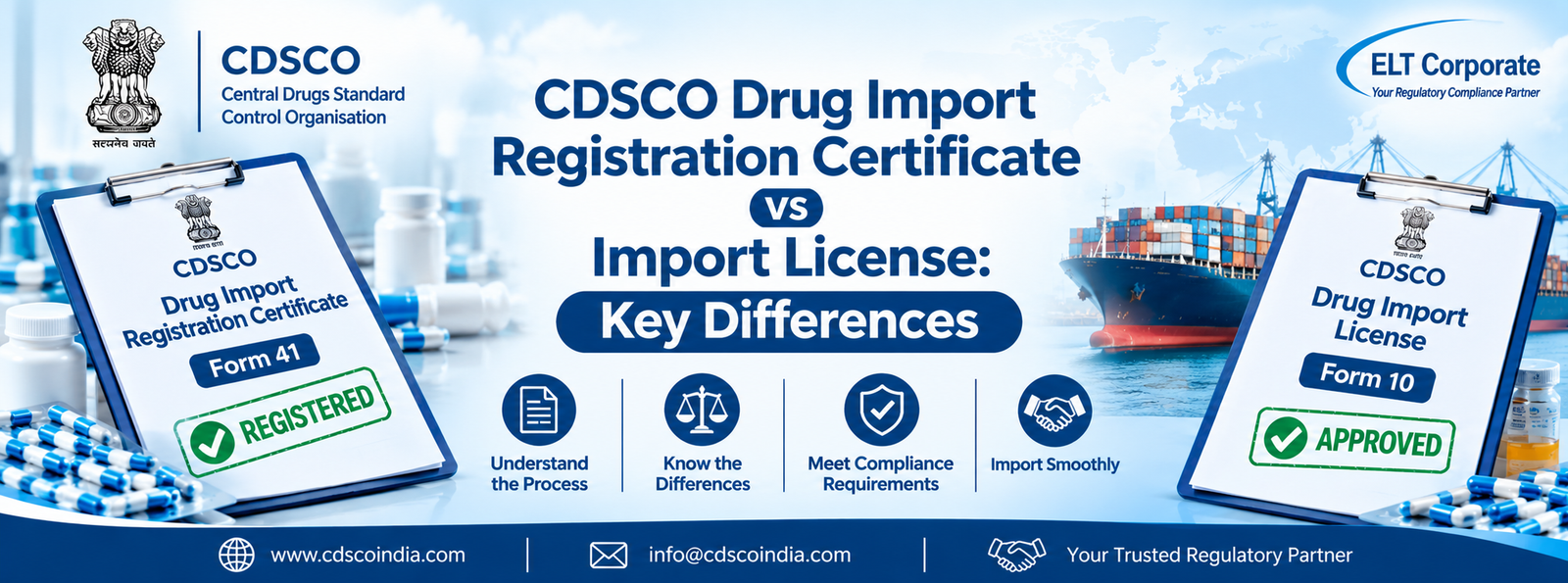
A Registration Certificate generally covers the foreign manufacturer and the drugs intended for import, while an Import License authorises the eligible importer to import the approved drugs.
Understanding these differences can help pharmaceutical companies, Indian importers, and foreign manufacturers avoid documentation errors and regulatory delays.
According to CDSCO, the registration and import licensing processes are governed by Rules 24A and 24 of the Drugs and Cosmetics Rules, 1945.
What Is a CDSCO Drug Import Registration Certificate?
A CDSCO Drug Import Registration Certificate is a regulatory certificate issued by CDSCO for the registration of foreign manufacturing premises and drugs intended for import into India.
It helps CDSCO verify important information about the foreign manufacturer, manufacturing facility, and the drugs proposed for import.
The certificate is generally issued in Form 41 under Rule 27A of the Drugs and Cosmetics Rules, 1945.
Purpose of a Drug Import Registration Certificate
The main purposes include:
- Registering the foreign drug manufacturer and manufacturing premises.
- Registering the drugs intended for import into India.
- Reviewing the required manufacturer and product information.
- Supporting regulatory compliance before commercial import.
- Helping Indian importers apply for the relevant Import License.
Who Needs a Registration Certificate?
A foreign pharmaceutical manufacturer planning to supply drugs to India generally needs the applicable registration approval.
The application may be submitted by the foreign manufacturer or its authorised Indian agent, subject to the applicable eligibility and documentation requirements.
Example
Suppose a pharmaceutical company in Germany manufactures a medicine and wants to supply it to an Indian importer.
Before the relevant commercial import can take place, the manufacturer and the drug may need to be registered with CDSCO. The resulting Registration Certificate establishes the applicable registration approval.
What Is a CDSCO Drug Import License?
A CDSCO Drug Import License is the regulatory permission required by an eligible importer to import drugs into India under the applicable provisions of the Drugs and Cosmetics Rules, 1945.
It is generally issued in Form 10 for drugs other than those specified in Schedule X. Drugs specified in Schedule X require the applicable license in Form 10A.
The Import License is different from the Registration Certificate because it relates to the importer’s authorisation to import the relevant drugs.
Purpose of a Drug Import License
The Import License helps ensure that:
- The importer meets the applicable eligibility requirements.
- The drugs being imported have the required regulatory approval.
- The relevant Registration Certificate is available where required.
- The import activity complies with applicable Indian drug regulations.
- The importer follows the conditions attached to the license.
Who Needs an Import License?
An eligible Indian importer or authorised Indian agent involved in importing drugs for commercial purposes may need the applicable Import License. The exact requirements depend on the type of drug, the applicant’s eligibility, and the applicable regulatory provisions.
Example
An Indian pharmaceutical company wants to import a registered medicine from a German manufacturer.
The foreign manufacturer’s Registration Certificate may already be available. However, the Indian company must still obtain the applicable Import License before importing the medicine, unless a specific exemption or alternative permission applies.
CDSCO Drug Import Registration Certificate vs Import License: Key Differences
The following table explains the difference between the two approvals in simple terms.
| Basis | Registration Certificate | Import License |
| Main purpose | Registers the foreign manufacturer, premises, and applicable drugs | Authorises the eligible importer to import drugs |
| Relevant form | Form 41 | Form 10 or Form 10A |
| Applicant | Foreign manufacturer or eligible authorised Indian agent | Eligible manufacturer or Indian agent/importer, as applicable |
| Main regulatory provision | Rule 27A and Rule 24A | Rules 24 and 27 |
| Main focus | Manufacturer and product registration | Importer’s permission to import |
| Application | Generally Form 40 | Generally Form 8 or Form 8A |
| Relationship | Supports the import licensing process | Generally requires the relevant Registration Certificate |
1. Difference in Purpose
The Registration Certificate focuses on the foreign manufacturer and the drugs intended for import into India.
The Import License focuses on authorising the eligible applicant to import those drugs.
This is the most important distinction when comparing CDSCO Drug Import Registration Certificate vs Import License.
2. Difference in Application Forms
The Registration Certificate application is generally submitted in Form 40, while the Import License application is generally submitted in Form 8 or Form 8A, depending on the applicable drug category.
The corresponding approvals are issued in Form 41 and Form 10 or Form 10A.
3. Difference in Applicant
The foreign manufacturer or its eligible authorised Indian agent generally applies for the Registration Certificate.
The Import License application is submitted by an eligible applicant under the relevant provisions, such as the manufacturer or its authorised Indian agent meeting the prescribed requirements.
4. Difference in Regulatory Coverage
The Registration Certificate covers the registered manufacturing premises and applicable drugs. The Import License covers the import activity permitted to the license holder, subject to the license conditions.
5. Difference in Documentation
Registration applications generally require manufacturer-related information, product details, manufacturing documents, and applicable undertakings.
Import License applications generally require importer-related information, the relevant Registration Certificate where required, and the prescribed application documents.
6. Difference in Validity
The Registration Certificate and Import License have their own validity provisions under the Drugs and Cosmetics Rules, 1945.
Both are generally subject to a three-year validity period unless suspended or cancelled earlier, with renewal or continuation governed by the applicable rules.
7. Difference in Regulatory Responsibility
The foreign manufacturer is primarily responsible for providing accurate manufacturing and product information for registration.
The Indian importer is responsible for ensuring that its import activity is covered by the applicable license and that it complies with relevant regulatory conditions.
Documents Required for CDSCO Drug Import Registration Certificate
The documents required may vary depending on the drug category, manufacturing location, and application details.
Common documents include:
- Application in Form 40.
- Power of Attorney in favour of the authorised Indian agent, where applicable.
- Manufacturing license or relevant approval from the country of origin.
- Product information and drug details.
- Manufacturing site information.
- Free Sale Certificate or other applicable evidence of approval.
- Schedule D(I) and D(II) information and undertakings.
- Prescribed fee and supporting documents.
Applicants should verify the latest CDSCO checklist before submitting their application.
Documents Required for CDSCO Drug Import License
The documents generally include:
- Application in Form 8 or Form 8A, as applicable.
- Copy of the relevant Registration Certificate in Form 41, where required.
- Prescribed undertaking in Form 9.
- Importer or authorised agent’s applicable license documents.
- Drug details and manufacturer information.
- Prescribed application fee.
- Other supporting documents required by CDSCO.
The exact documents depend on the drug category and the applicable rules. Some categories, including specified diagnostic products, may have different requirements or exemptions.
IndiaCode+1
CDSCO Drug Import Registration and License Process
Understanding the process can help businesses prepare documents correctly and avoid unnecessary delays.
Step 1: Identify the Drug Category
Determine whether the product is a bulk drug, finished formulation, or another regulated drug category.
Check whether any additional approval or specific regulatory requirement applies.
Step 2: Prepare the Registration Application
The foreign manufacturer or its eligible authorised Indian agent prepares the applicable Registration Certificate application with the required manufacturer and product documents.
Step 3: Submit the Application Through SUGAM
The application is submitted through the applicable CDSCO online process. The applicant should ensure that all required documents and information are complete and accurate.
Step 4: Obtain the Registration Certificate
After regulatory review and satisfaction of the applicable requirements, CDSCO may issue the Registration Certificate in Form 41.
Step 5: Apply for the Import License
The eligible importer or authorised applicant submits the relevant Import License application with the required supporting documents.
Step 6: Obtain the Import License
After review, CDSCO may issue the applicable Import License in Form 10 or Form 10A.
Step 7: Complete Import Compliance
The importer should ensure that the shipment, product details, labeling, documentation, and applicable customs and regulatory requirements are fulfilled before importing the drugs.
The exact process may differ depending on the product category and applicable exemptions.
Why Are Both Approvals Important for Pharmaceutical Businesses?
Understanding CDSCO Drug Import Registration Certificate vs. Import License is important because the two approvals serve different regulatory purposes.
Having only one approval may not be sufficient for a proposed commercial import.
Both approvals, where applicable, help businesses:
- Maintain regulatory compliance.
- Reduce the risk of import delays.
- Avoid incomplete or incorrect applications.
- Ensure that the foreign manufacturer and drugs are appropriately registered.
- Ensure that the importer has the relevant permission.
- Support smooth coordination between the manufacturer, Indian agent, importer, and regulatory authorities.
Businesses should verify the applicable requirements before placing commercial orders or arranging shipments.
Common Mistakes to Avoid During Drug Import Registration
Pharmaceutical companies and importers should avoid these common mistakes:
- Confusing registration with import permission: A Registration Certificate and an Import License are not interchangeable.
- Submitting incomplete documents: Missing manufacturer or product information may delay application processing.
- Using incorrect application forms: The appropriate form depends on the drug category.
- Ignoring manufacturer details: Manufacturing site information should be accurate and consistent.
- Overlooking product-specific requirements: Some drugs may require additional regulatory approvals.
- Ignoring license validity: Businesses should monitor validity and renewal requirements.
- Starting import activities too early: Confirm that all required approvals are in place before shipment.
Conclusion
The key difference between a CDSCO Drug Import Registration Certificate and an Import License is that the Registration Certificate covers the foreign manufacturer, manufacturing premises, and applicable drugs, while the Import License authorises the eligible applicant to import those drugs into India.
Both approvals play an important role in pharmaceutical import compliance. Understanding their purpose, application forms, documentation, and regulatory requirements can help businesses plan their import activities more effectively.
Before applying, pharmaceutical manufacturers and importers should review the applicable CDSCO requirements to ensure that their applications are complete and accurate.
How ELT Corporate Helps with CDSCO Drug Import Registration
ELT Corporate provides regulatory compliance assistance to pharmaceutical companies, foreign drug manufacturers, and Indian importers seeking to import drugs into India.
Our team helps businesses understand the requirements for a CDSCO Drug Import Registration Certificate vs. an Import License and prepare their applications according to applicable regulatory requirements.
Our Services Include:
- CDSCO Drug Import Registration: Assistance with Registration Certificate applications and manufacturer documentation.
- Drug Import License: Support with preparing and submitting the applicable Import License application.
- Documentation Support: Assistance in preparing and reviewing required documents.
- Regulatory Consultation: Guidance on applicable drug import requirements and regulatory procedures.
- Application Assistance: Support with SUGAM application preparation and submission.
- Compliance Support: Assistance in understanding applicable regulatory conditions and documentation requirements.
Whether you are a foreign pharmaceutical manufacturer or an Indian importer, ELT Corporate can help you understand the applicable regulatory process and prepare your application efficiently.
Contact ELT Corporate for professional assistance with drug import registration and licensing requirements in India.
Frequently Asked Questions
Q1. What is the difference between a CDSCO Drug Import Registration Certificate and an Import License?
A Registration Certificate registers the foreign manufacturer, manufacturing premises, and applicable drugs. An Import License authorises the eligible applicant to import those drugs into India.
A Registration Certificate is generally required for commercial drug imports under the applicable rules. However, certain categories or specific regulatory situations may have different requirements or exemptions.
Form 41 is the Registration Certificate issued under Rule 27A of the Drugs and Cosmetics Rules, 1945, for the registration of applicable foreign manufacturing premises and drugs.
Form 10 is the Import License issued for importing drugs other than those specified in Schedule X, subject to the applicable regulatory requirements.
Generally, a copy of the relevant Registration Certificate is required with the Import License application. However, specific exemptions or exceptional permissions may apply under the relevant rules.
The foreign manufacturer or its eligible authorised Indian agent can generally apply for the Registration Certificate, subject to the applicable requirements.
The Registration Certificate is generally valid for three years unless suspended or cancelled earlier. Applicants should check the applicable validity and renewal provisions.
ELT Corporate assists pharmaceutical manufacturers and importers with regulatory consultation, document preparation, application support, and guidance on applicable CDSCO drug import requirements.